What Happens to Nicotine Salt Chemistry Inside a JUUL 2 Pod Over Time?

On this page17 sections
- What Is Nicotine Salt in a JUUL 2 Pod?
- Does Nicotine Salt Change Chemically Over Time?
- Why Does Nicotine E-Liquid Turn Yellow, Amber, or Brown?
- What Causes Nicotine to Degrade Faster?
- Does a Few Months of Storage Ruin the Nicotine Salt?
- Why an Opened Pod Can Change Differently From a Sealed Pod
- Why Does a Partially Used Pod Sometimes Look Darker Near the Coil?
- Does Nicotine Strength Decrease as a Pod Ages?
- How Scientists Measure Nicotine Degradation
- Can You Tell if an Old JUUL 2 Pod Has Gone Bad?
- How Should JUUL 2 Pods Be Stored?
- Nicotine Oxidation vs. Coil-Related Darkening
- Common Myths About Aging Nicotine Salt
- Fresh vs. Aged JUUL 2 Pod: What Can Actually Change?
- How Long Does Nicotine Salt Stay Stable?
- Frequently Asked Questions
- Final Takeaway
If you’ve ever picked up an older JUUL 2 pod and noticed the liquid looks darker than the one you opened last week, you’ve probably wondered what’s actually going on inside it. Is the nicotine still there? Has it gone bad? Should you even use it?
These are fair questions, and the honest answer is a bit more nuanced than a quick internet search usually gives you. Nicotine is a reactive molecule. It changes over time, especially when exposed to air, heat, and light. But a change in color doesn’t automatically tell you how much nicotine is left, and it definitely doesn’t mean the pod is dangerous.
Let’s walk through the actual chemistry, what causes it, and how to store your pods so they stay as close to their original condition as possible, especially if you live somewhere as hot as the UAE.
What Is Nicotine Salt in a JUUL 2 Pod?
How Nicotine Salt Is Formed
Nicotine, in its raw form, is what chemists call a “freebase,” a molecule that’s naturally alkaline. Freebase nicotine can feel harsh at higher strengths because of how it interacts with the throat and lungs.
Nicotine salt is created by reacting freebase nicotine with an organic acid. This is a process called protonation: the acid essentially donates a proton to the nicotine molecule, changing its chemical form and lowering the pH of the resulting liquid. Some pod-based e-liquids use benzoic acid for this, though the exact acid system can vary by product line and market, so it’s not accurate to assume every JUUL 2 pod worldwide uses an identical formulation.
The practical result of this chemistry is that nicotine salt tends to feel smoother when inhaled compared to a similar concentration of freebase nicotine. That’s a big part of why pod systems moved toward salt-based formulations in the first place.
What Else Makes Up the E-Liquid?
Nicotine salt is only one ingredient. The rest of the e-liquid is generally made up of:
- Propylene glycol (PG): a thin liquid that carries flavor and helps produce throat sensation
- Vegetable glycerin (VG), where applicable: a thicker liquid connected to vapor production
- Nicotine: in salt form, as discussed above
- Organic acids: used to create the salt formulation
- Flavor compounds: proprietary blends that give each pod its taste
- Water and other formulation components: present in small amounts depending on the recipe
Here’s an important honesty check: the exact ratios and proprietary flavor systems used inside a JUUL 2 pod aren’t publicly published in full detail. What’s covered above reflects general, publicly documented e-liquid chemistry, not confirmed proprietary specifications. If you want the manufacturer’s own documentation, that’s the most reliable source.
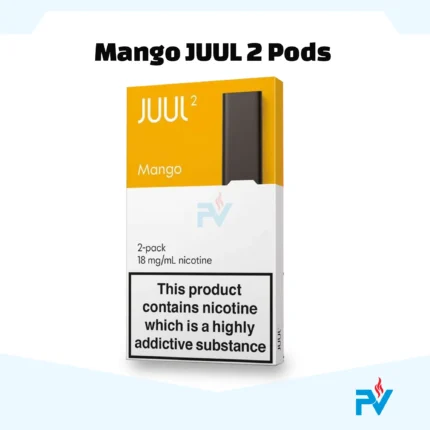
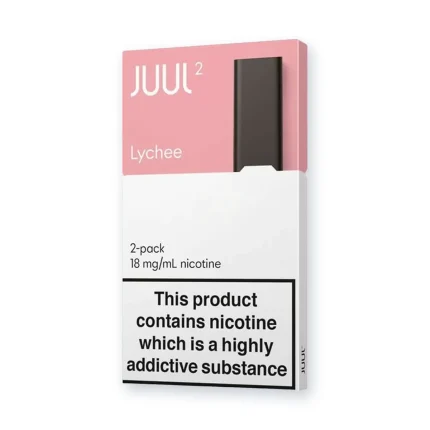
If you’re comparing flavors, options like Mango, Watermelon, and Lychee all use the same underlying nicotine salt base, just with different flavor compounds layered on top.
Does Nicotine Salt Change Chemically Over Time?
Yes. Nicotine is chemically reactive and can gradually degrade, particularly when it’s exposed to oxygen, heat, and light. This isn’t unique to JUUL 2; it’s true of nicotine-containing e-liquids in general.
How fast this happens depends heavily on storage conditions. A pod kept sealed, cool, and away from sunlight will change far more slowly than one left open on a car dashboard in the sun.
Nicotine Oxidation Explained Simply
Oxidation happens when oxygen molecules interact with nicotine. Over time, this interaction can:
- Form oxidation byproducts within the liquid
- Gradually shift the overall chemical composition.
- Affect the liquid’s color
- Change certain sensory characteristics, like smell or taste.
Research into nicotine degradation has identified several compounds that can form during this process, including nicotine-N-oxide, cotinine, and other minor degradation products. It’s worth being careful here: no single compound is solely responsible for every case of color change. Multiple reactions can be happening at once, and the exact byproducts can vary by formulation and storage history.
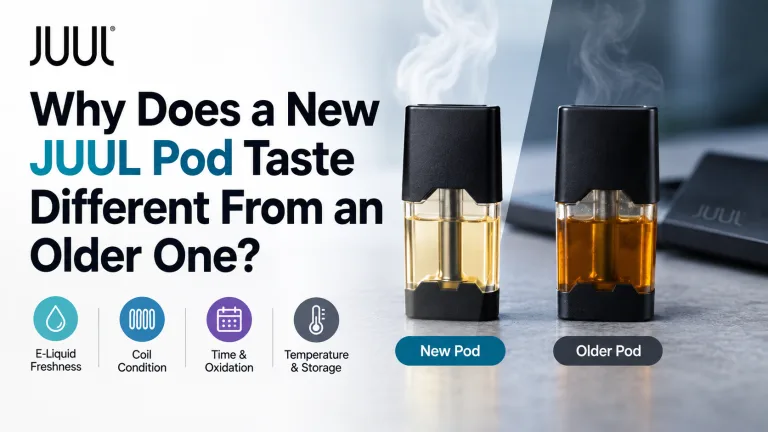
Why Does Nicotine E-Liquid Turn Yellow, Amber, or Brown?
This is probably the question that brought you here, so let’s answer it directly.
Nicotine Oxidation Can Cause Darkening
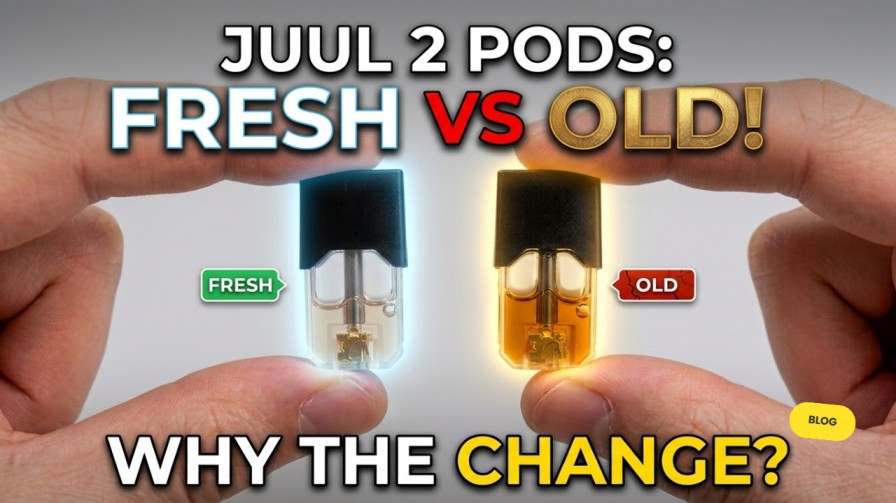
As nicotine oxidizes, the liquid can shift from a clear or pale yellow tone toward amber and eventually brown. This progression typically happens gradually rather than as a sudden shift, and it tends to track with how much oxygen, heat, and light exposure the liquid has had.
That said, visual darkening is not a quantitative measurement. You cannot look at a pod and calculate a percentage of nicotine lost. Color change is a signal that some chemical activity has occurred, not a nicotine meter.
Darker Does Not Automatically Mean Stronger or More Dangerous
This is where a lot of confusion happens, so let’s be direct about it:
- Darker liquid does not necessarily mean higher nicotine.
- Darker liquid does not necessarily mean lower nicotine.
- Darker liquid is not automatically unsafe.
Color reflects chemical change, not concentration. A pod could look slightly darker and still have most of its original nicotine intact, or it could look only mildly changed and have undergone more degradation than expected. Without lab testing, appearance alone can’t tell you which.
What Causes Nicotine to Degrade Faster?
There are four main factors at play. Think of this as a practical checklist for anyone storing or shopping for pods.
Oxygen
Air exposure is one of the biggest drivers of oxidation. A sealed, unopened pod has minimal contact with oxygen. Once a pod is opened and used repeatedly, or if the seal is compromised, the liquid inside is exposed to a very different environment, one where oxidation has far more opportunity to happen.
Heat
Higher temperatures generally speed up chemical reactions, and nicotine oxidation is no exception. What matters more than a brief temperature spike is prolonged heat exposure: leaving pods somewhere consistently hot for days or weeks does more damage than a short car ride. Normal vaping use itself doesn’t instantly destroy the nicotine in a pod; it’s sustained environmental heat that’s the real concern.
Light and UV Exposure
Photochemical degradation is a real phenomenon: light, and UV light in particular, can drive chemical reactions in nicotine. Ordinary indoor lighting is a much smaller concern than prolonged direct sunlight. A pod sitting in a sunny windowsill for weeks is in a very different situation than one stored in a drawer.
Time
Degradation is gradual, not an overnight event. There’s no universal “X percent lost by day 30” figure that applies across all products, because the rate depends entirely on the other three factors: oxygen, heat, and light exposure. Time alone, without unfavorable conditions, tends to cause much slower change than time combined with heat or sunlight.
Does a Few Months of Storage Ruin the Nicotine Salt?
Short answer: not necessarily, and it depends almost entirely on how the pod was stored.
Stability Is Not the Same as “No Chemical Change”
A substance can be relatively stable and still undergo small, gradual chemical changes. Stability doesn’t mean zero change; it means the rate of change is slow under reasonable conditions. It’s not accurate to assume that every pod that’s been sitting for a few months has experienced significant nicotine loss.
Why Storage Conditions Matter More Than Age Alone
Consider these scenarios side by side:
- Sealed, cool, and dark: minimal oxygen, heat, or light exposure; slowest rate of change
- Opened and kept warm: more oxygen contact, faster reactions
- Left in direct sunlight: UV exposure accelerates degradation.
- Damaged packaging: a compromised seal exposes the liquid to more air and moisture.
The key takeaway: an older pod that was stored properly isn’t automatically equivalent to a poorly stored pod of the same age. Storage conditions matter more than the calendar date.
Why an Opened Pod Can Change Differently From a Sealed Pod
More Air Exposure
Once opened, a pod is exposed to more oxygen, both from being unsealed and from repeated use, where air moves through the pod each time it’s puffed. This ongoing exposure is different from a factory-sealed pod sitting untouched.
Moisture and Hygroscopic Ingredients
There’s a common misconception worth correcting here: people often assume the liquid in an open pod simply “evaporates” over time. That’s not quite accurate. PG and VG are hygroscopic, meaning they can interact with and absorb moisture from the surrounding air; they aren’t rapidly evaporating away at normal room temperature the way water might. Open storage does change the liquid’s environment, and volatile flavor and aroma compounds can behave differently from the bulk PG/VG, sometimes fading or shifting in character faster than the base liquid itself.
Why Does a Partially Used Pod Sometimes Look Darker Near the Coil?
This is a detail a lot of people notice but rarely get a clear explanation for.
Localized Heat Is Different From Bulk-Liquid Oxidation
The liquid sitting closest to the heating element experiences a very different environment than the liquid elsewhere in the pod. Repeated, localized heating creates conditions that differ significantly from general room-temperature storage.
Flavor Residues and Thermal Changes
Flavor compounds and sweetening agents can undergo their own heat-related changes near the coil or wick. Residue buildup in this specific area can look noticeably darker than the rest of the liquid, and that darkening is often related to flavor chemistry and heat exposure at the coil, not necessarily to the nicotine throughout the whole pod.
Why Coil-Area Discoloration Can Be Misleading
Here’s the key distinction: dark liquid near the heating area is not proof that all the nicotine in the pod has oxidized. It’s a localized effect, not a whole-pod measurement.
Does Nicotine Strength Decrease as a Pod Ages?
What We Can Say With Confidence
- Nicotine can undergo degradation over time.
- The remaining concentration depends on the specific formulation and how the pod was stored.
- Meaningful changes generally require enough time combined with unfavorable exposure: oxygen, heat, or light.
What We Cannot Determine by Looking at the Liquid
You cannot accurately estimate remaining nicotine concentration, percentage lost, or exact degradation rate just by looking at, smelling, or tasting the liquid, or by how it feels in your throat. These sensory cues can be influenced by flavor changes, coil residue, and other factors that have nothing to do with nicotine concentration specifically.
How Scientists Measure Nicotine Degradation
Chromatographic Analysis
Laboratories use analytical techniques to measure nicotine concentration and identify degradation products accurately. Two commonly referenced methods are High-Performance Liquid Chromatography (HPLC) and Gas Chromatography-Mass Spectrometry (GC-MS). These techniques separate and identify individual chemical compounds within a liquid sample, allowing researchers to measure concentrations precisely rather than estimate them.
Why Laboratory Testing Matters
There’s a real difference between an observation and a measurement:
- Observation: “The liquid became darker.”
- Measurement: “Analytical testing detected a specific change in nicotine concentration.”
Only the second statement tells you anything quantifiable. This is exactly why appearance-based judgments about nicotine strength don’t hold up scientifically; they’re observations, not measurements.
Can You Tell if an Old JUUL 2 Pod Has Gone Bad?
Signs That Deserve Attention
Some signs genuinely warrant caution, and you shouldn’t use a pod if you notice:
- Leaking
- A damaged pod body
- A compromised seal
- Unusual contamination
- Unexpected physical changes
- A strongly abnormal odor
- Significant deterioration in performance
Signs That Don’t Tell You the Exact Nicotine Strength
On the other hand, these don’t give you reliable information about nicotine concentration on their own:
- Color alone
- Throat hit
- Flavor intensity
- General liquid appearance
How Should JUUL 2 Pods Be Stored?
Best-Practice Storage
For the best shot at preserving a pod close to its original condition, aim for:
- A cool environment
- A dry environment
- A dark location, away from direct light
- A protected storage area, away from physical damage
- Keeping the pod sealed in its original packaging until you’re ready to use it
What About Refrigeration?
Lower temperatures can slow chemical reactions, so in theory, refrigeration could reduce the rate of nicotine degradation. But it’s not automatically necessary for normal use, and moving pods between temperature extremes can introduce condensation if the packaging isn’t suited for it. The simplest, most practical recommendation is cool, dry, and dark storage, following the manufacturer’s instructions on the packaging.
Avoid UAE Heat Exposure
If you’re shopping or storing pods in the UAE, ambient heat is your biggest enemy. A few practical habits go a long way:
- Don’t leave pods in a parked car, since cabin temperatures can climb dramatically within minutes
- Avoid direct sunlight, including on windowsills or near glass doors
- Avoid prolonged exposure to high ambient temperatures generally, even indoors near a window
- Always follow the manufacturer’s storage instructions printed on the packaging
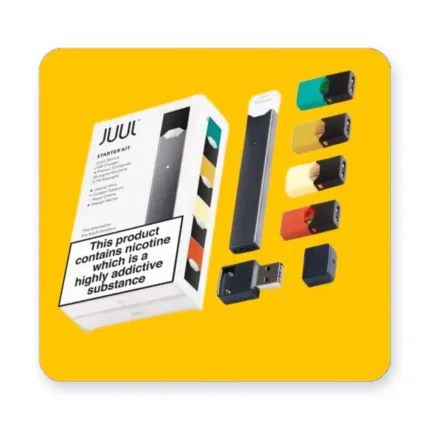
If you’re just getting started, a JUUL 2 Starter Kit usually comes with pods sealed fresh from the manufacturer, which is the best starting point for proper storage from day one.
Nicotine Oxidation vs. Coil-Related Darkening
| Observation | More Likely Explanation | What It Does Not Prove |
|---|---|---|
| Gradual darkening throughout the liquid | Chemical aging or oxidation may be contributing | Exact amount of nicotine lost |
| Dark material around the coil or wick | Localized heat and flavor residue | Whole-pod nicotine degradation |
| Changed flavor | Flavor chemistry or storage-related changes | Exact nicotine concentration |
| Leaking pod | Packaging or device integrity issue | Nicotine oxidation |
| Unusual appearance after heat exposure | Possible heat-related degradation | A specific chemical compound, without lab testing |
Common Myths About Aging Nicotine Salt
“If It Turns Brown, All the Nicotine Is Gone”
Not true. Browning reflects oxidation activity, not a complete loss of nicotine. Degradation is typically gradual and partial, not total.
“Darker Liquid Means Stronger Nicotine”
Also not true. Color has no direct, measurable relationship to nicotine concentration. A darker liquid could have more, less, or roughly the same nicotine as a lighter one; you’d need lab testing to know.
“Nicotine Salt Never Degrades”
Nicotine salt is more chemically stable than freebase nicotine in many respects, but “stable” doesn’t mean “immune to change.” Given enough oxygen, heat, and time, it will undergo some degree of chemical change.
“Every Old Pod Is Unsafe”
Age alone doesn’t tell you enough. A properly stored older pod can be in far better condition than a poorly stored newer one. What matters is the storage history, not just the number of days since purchase.
“The Dark Liquid Near the Coil Is Proof of Nicotine Oxidation”
As covered earlier, coil-area darkening is often driven by localized heat and flavor residue, not necessarily bulk nicotine oxidation across the whole pod.
“PG and VG Simply Evaporate From an Open Pod”
This oversimplifies the chemistry. PG and VG are hygroscopic and interact with atmospheric moisture rather than rapidly evaporating at room temperature. Volatile flavor compounds are a separate factor and can change independently of the base liquid.
Fresh vs. Aged JUUL 2 Pod: What Can Actually Change?
| Characteristic | Fresh / Properly Stored | Older or Poorly Stored |
|---|---|---|
| Nicotine | Closer to original formulation | May undergo gradual degradation |
| Color | Typically closer to original appearance | May become darker |
| Flavor | Intended profile | May become altered or muted |
| Aroma | Typical formulation aroma | May change |
| Liquid | Expected appearance | May show storage-related changes |
| Coil area | Normal | May accumulate darker residue with use |
Keep in mind these are general chemical and physical tendencies, not a laboratory specification that applies identically to every JUUL 2 pod or every market.
How Long Does Nicotine Salt Stay Stable?
There isn’t a simple “X months, and it’s done” answer, and any article claiming otherwise is oversimplifying. Real stability depends on:
- Manufacturer shelf-life guidance printed on packaging
- Whether the pod is unopened or has been opened and used
- Storage temperature over time
- Light exposure
- Oxygen exposure
- Whether the packaging seal is intact
Why There Is No Universal JUUL 2 Degradation Timeline
Formulations can differ by market and product line, and manufacturers don’t publish a single universal degradation curve that applies to every version of the product worldwide. The most reliable guidance is the shelf-life information printed on your specific pod’s packaging, combined with good storage habits.
Frequently Asked Questions
Does nicotine salt oxidize over time?
Yes. Nicotine is chemically reactive, so it can gradually oxidize when exposed to oxygen, heat, or light. The rate of change depends largely on storage conditions and exposure time.
Why does nicotine salt turn brown?
Oxidation and other chemical changes can alter the composition of the e-liquid, causing its color to shift from pale yellow toward amber or brown over time. Color change alone does not identify the exact chemical changes taking place.
Does darker e-liquid mean less nicotine?
No. Color is not a reliable measure of nicotine concentration. Darkening indicates that some chemical change may have occurred, but it cannot show how much nicotine has been lost or remains.
Does heat make nicotine degrade faster?
Yes. Higher temperatures generally accelerate chemical reactions. Prolonged exposure to heat can therefore increase nicotine degradation compared with storage at more moderate temperatures.
Does sunlight affect nicotine salt?
Yes. Light, particularly UV exposure, can contribute to photochemical degradation. Prolonged direct sunlight is a greater concern than ordinary indoor lighting.
Does opening a JUUL 2 pod increase oxidation?
Yes. Opening a pod increases its exposure to oxygen. Repeated use can also expose the remaining liquid to air, potentially allowing chemical changes to occur faster than in a properly sealed pod.
Can you measure nicotine strength by color?
No. Color is an observable characteristic, not a measurement of nicotine concentration. Determining the actual nicotine level requires laboratory analysis, such as HPLC or GC-MS testing.
Why is the liquid darker around the coil?
Darkening around the heating area is often associated with localized heat and the accumulation or thermal alteration of flavor residues near the coil. It does not, by itself, prove that the nicotine throughout the entire pod has oxidized.
Does PG or VG evaporate from an open pod?
Not in the simple way people often assume. PG and VG are hygroscopic, meaning they can interact with moisture in the surrounding air. They also have relatively low volatility at room temperature. Volatile flavor compounds can behave differently and may change with prolonged air exposure.
Should you refrigerate JUUL 2 pods?
Refrigeration is not generally required. Lower temperatures can slow some chemical reactions, but practical storage in a cool, dry, dark place is usually more appropriate. Avoid unnecessary temperature changes that could create condensation.
How should JUUL 2 pods be stored?
Keep pods sealed until use and store them in a cool, dry, dark place away from direct sunlight and prolonged heat. Avoid leaving them in high-temperature environments such as parked vehicles.
Should you use a pod that is expired or damaged?
No. A pod that is leaking, physically damaged, has a compromised seal, shows unusual contamination, or develops a strongly abnormal odor should not be used. Follow the manufacturer’s expiration and storage guidance rather than relying on appearance alone.
Final Takeaway
Nicotine salt inside a JUUL 2 pod can undergo gradual chemical change over time, and oxygen, heat, and light are the main factors that speed this up. Darkening can accompany that chemical aging, but it cannot tell you how much nicotine is actually left, that requires laboratory testing, not a visual check. Flavor changes can come from nicotine oxidation, changes in the flavor compounds themselves, or both together. Dark material around a used coil often has a different explanation than oxidation happening throughout the whole pod. The bottom line: proper storage that’s cool, dry, dark, and sealed until use is the most practical way to minimize unnecessary chemical and physical changes, especially if you’re storing pods somewhere as hot as the UAE.
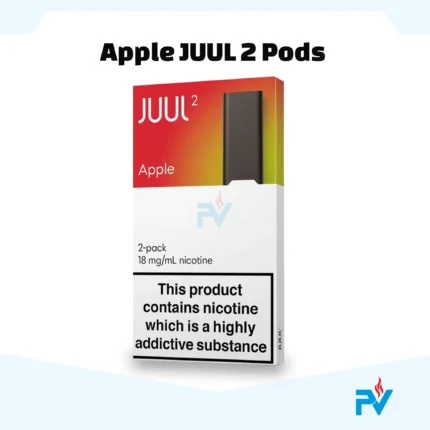
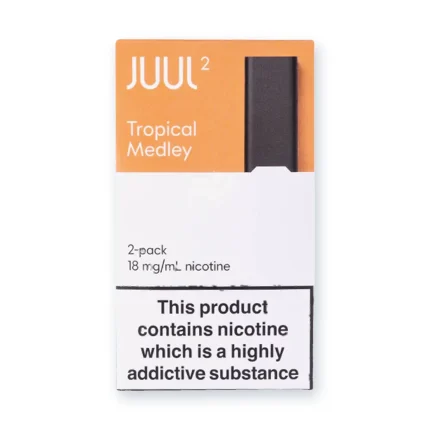
If you’re shopping for fresh, properly stored JUUL 2 pods in the UAE, Podsvibe carries a full range of flavors, including Apple, Arctic Breeze, Autumn Tobacco, Blackcurrant Tobacco, Crisp Menthol, Polar Menthol, Ruby Menthol, Summer Menthol, Tropical Medley, and Virginia Tobacco.
If you’re new to the system, the JUUL 2 Device in Slate Grey is a good place to start.
Scientific note: This article explains established, publicly documented principles of nicotine and e-liquid chemistry. JUUL 2 formulations can vary by market, and any proprietary formulation or degradation data specific to the product should not be assumed unless it’s supported by manufacturer documentation or independent, peer-reviewed analytical research.