Why Does a JUUL Pod Produce Different Vapor Levels During the Same Session?

On this page8 sections
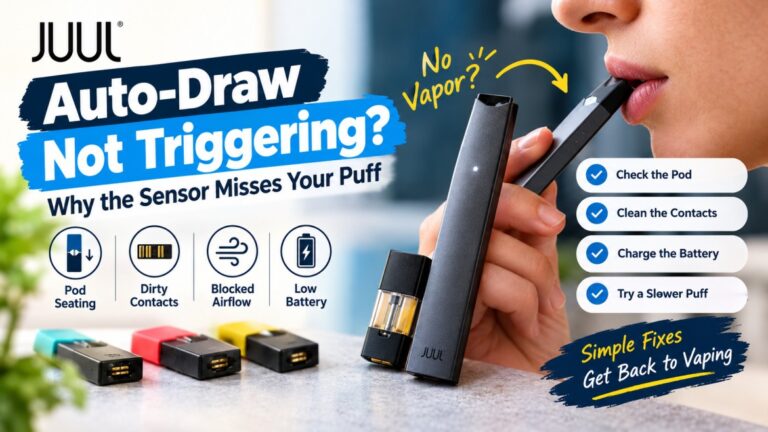
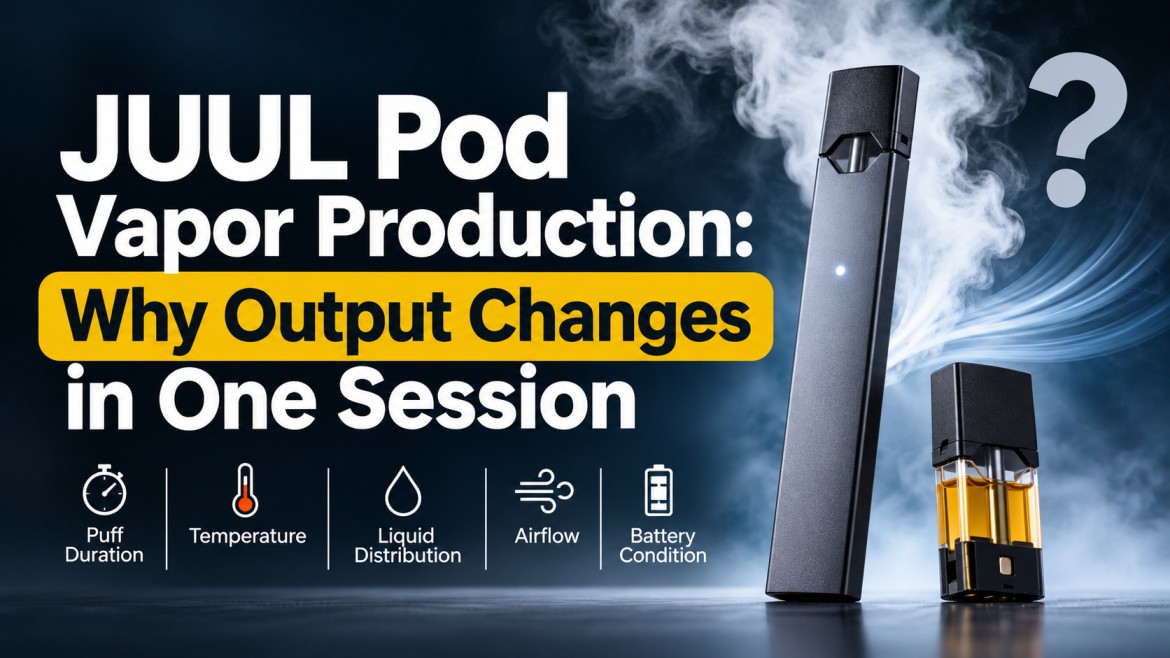
You take a puff on your JUUL and get a full, visible cloud. The next one looks thin, and the one after that is somewhere in the middle. If you have wondered whether the pod is going bad, you are in good company, because it is one of the most common questions vapers ask. The short answer is that JUUL pod vapor production is not supposed to be identical on every draw. Puff length, airflow, device temperature, the way liquid sits inside the pod, and battery condition all shape what you see. Cloud size also tells you very little about nicotine delivery or overall quality, so it is a poor way to judge a pod. This guide walks through what is really going on, so you can tell normal variation from a genuine fault.
How a JUUL Creates Vapor in the First Place
The Two Parts and What Each One Does
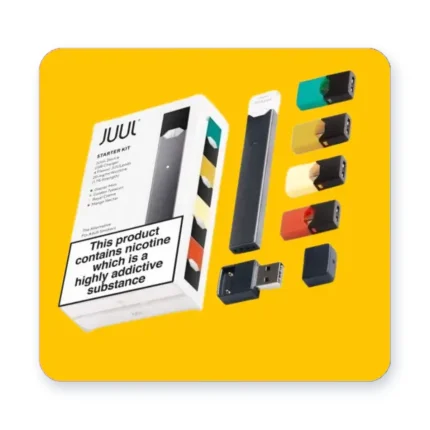
A JUUL system is made of two pieces that depend on each other. The pod holds the e-liquid in a small reservoir and contains the heating element. The device carries the battery and the electronics that notice when you draw. When you inhale, the device senses the airflow and sends power through the contacts to the heating element. That heat turns a tiny amount of liquid into aerosol, which travels through the airflow channel to your mouth.
Why No Single Part Explains Everything
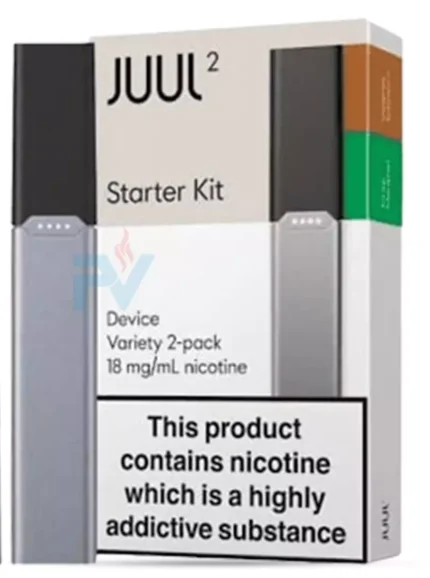
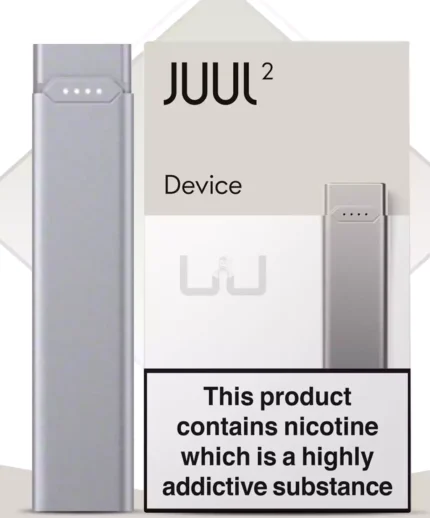
Vapor output comes from heating, airflow, and liquid supply all working at the same moment. A hard draw with a lagging liquid supply looks different from a gentle draw with plenty of liquid at the coil. That is why two puffs taken seconds apart can look so different even when nothing is wrong. Once you understand that, the behavior of your JUUL 2 device starts to make a lot more sense.
Why Vapor Output Changes From Puff to Puff
Puff Length and Draw Strength
A longer draw pulls more air through the device and keeps the heating element active for more time, so the cloud is usually bigger. A short, light draw gives you less. Pulling harder does not increase output in a straight line either, because the system heats only a limited amount of liquid at a time. Back to back puffs rarely look the same for this reason alone.
Device Temperature and Repeated Draws
The heating element responds to how often you use it. The first draw starts from a cooler state, while a quick run of puffs can leave the device warmer and change how the next one behaves. This is a normal, temporary variation. Heat matters even more in the UAE, and the guide on how temperature affects JUUL pod performance explains why.
Where the Liquid Is Sitting
The heating element needs steady contact with liquid to produce consistent aerosol. If the pod has just been moved or tilted, the liquid may need a moment to reach the heating area again, and output dips for a puff or two. This is also why a pod can feel different after a long rest, which the guide to flavor changes during the day covers well.
Airflow, Condensation, and Battery Condition
Air has to pass freely through the connection area and the airflow channel. A little condensation or debris near the pod base can partly block that path and make one puff feel tighter than the last. A low battery can also reduce how consistently the device powers the heating element. If you suspect the battery, the JUUL 2 battery draining guide is the right next read.
How Pod Design Shapes Consistency
The Reservoir and the Heating Element
The reservoir stores the liquid and feeds it to the heating element, so its design affects how evenly liquid reaches the coil. Any irregularity in heating or feeding shows up as uneven output. These parts are sealed, which means they cannot be inspected or repaired, and they should never be opened. The JUUL pod materials guide explains what a pod is made of and why that matters.
Airflow Channels and Connection Points
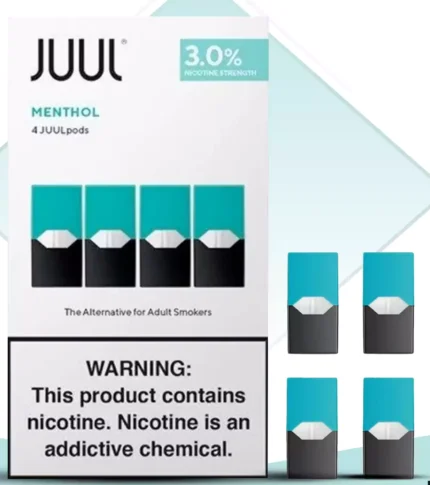
Narrow internal channels guide the air, so even slight restriction changes the draw. The electrical contacts between pod and device matter just as much, because residue or a loose fit can interrupt power and cause uneven activation. Every flavor shares the same connection design. Mango JUUL 2 Pods and Crisp Menthol JUUL 2 Pods use the same fit, so a pattern that repeats across different flavors usually points at the device or the connection rather than the liquid inside.
Why the First Puff Often Looks Different
Starting From a Cooler State
The first draw happens under different conditions from the ones that follow. The heating element is cooler and the liquid has been resting, so the first puff can look thicker, thinner, or simply different. By the second or third puff the system usually settles into a steadier rhythm. A gap between the first puff and the rest does not mean the pod is defective.
What Resting Does to the Pod
After a long break, liquid redistributes inside the pod, so the first few draws can feel unusual. This is common overnight or after the device sits in a bag. If the pod settles within a few puffs, that is ordinary behavior. A pod that stays weak for the whole session is a different case, and the weak JUUL hit and airflow guide covers what to check.
Reading the Clues: Device or Pod?
What Each Observation Usually Suggests
| What You Notice | Possible Contributing Factor |
|---|---|
| Output changes often within one session | Airflow or liquid distribution |
| Device does not activate consistently | Battery or activation system |
| Output gets weaker over time | Pod condition or device performance |
| Pod feels unstable in the device | Connection points |
| Visible moisture around the contacts | Condensation or leakage |
| Several pods behave the same way | Possible device issue |
What You Can and Cannot Tell From the Outside
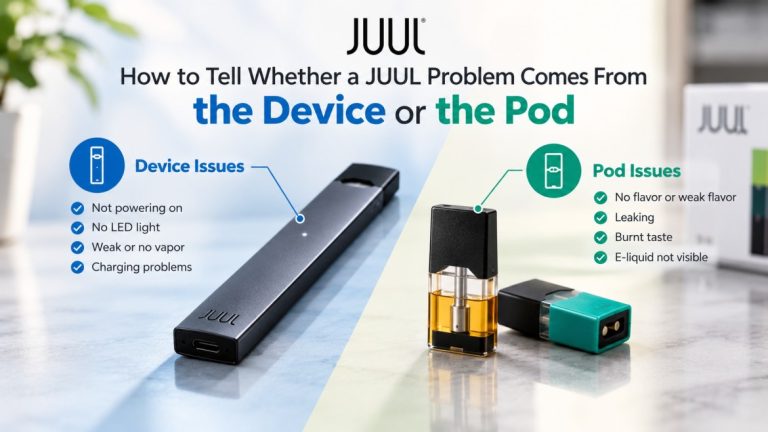
Treat this table as a set of clues, not a diagnosis. Symptoms overlap, and you cannot confirm an internal fault just by looking at a sealed pod or device. The simplest test is to try another compatible pod. If the problem follows one pod, suspect that pod, and if it shows up with every pod, look at the device. The full JUUL troubleshooting guide walks through this properly.
Warning Signs, Care, and Replacement
Signs That Deserve Attention
Some behavior is worth acting on rather than waiting out. That includes persistent weak or absent aerosol, repeated activation failures, visible leakage, unusual overheating, or a damaged casing or connection point. If a device overheats or looks damaged, stop using it and do not try to open it or repair the battery. Odd sounds are worth checking too, and the crackling and gurgling guide explains the usual causes.
Keeping Output Steady in UAE Conditions
- Keep the connection area clean and dry before attaching a pod
- Store pods away from heat, direct sunlight, and parked cars, as covered in the UAE heat and storage guide
- Check pods for cracks or leaks before use
- Use only compatible, authentic pods and follow the manufacturer’s charging instructions
- Never open, modify, or try to repair sealed pod parts
When It Is Time to Replace the Pod
Replace a pod that is cracked, leaking, or repeatedly fails to work normally, and follow manufacturer guidance for disposal. If you are choosing a replacement, start with the most popular JUUL 2 pods in the UAE or browse the full Juul Dubai shop. Virginia Tobacco JUUL 2 Pods, Watermelon JUUL 2 Pods, and Arctic Breeze JUUL 2 Pods all fit the same device.
Frequently Asked Questions
Why does my JUUL produce more vapor in some puffs than others?
Puff length, airflow, device temperature, and liquid distribution all change visible aerosol from one draw to the next.
Does a low JUUL battery affect vapor production?
It can. A low or aging battery may power the heating element less consistently, which shows up as uneven output.
Can condensation reduce JUUL vapor production?
Yes. Moisture around the airflow path or contacts can restrict air and interfere with normal operation.
Why does my JUUL produce less vapor after several puffs?
Repeated draws change thermal conditions and liquid availability. Weakness that lasts may point to a pod or device problem.
Does JUUL pod age affect vapor production?
Storage history and condition matter. Damaged, leaking, or poorly stored pods may not perform as expected.
How can I tell whether the pod or the device is causing inconsistent vapor?
If the same problem appears with several compatible pods, suspect the device. If it follows one damaged or leaking pod, suspect the pod. The inconsistent hits with new pods guide gives more detail.
Is inconsistent vapor always a sign of a defective pod?
No. Some variation is normal. Persistent activation failures, leakage, or overheating should not be ignored.
Final Thoughts on Changing Vapor Levels
Vapor production shifts during a session because airflow, temperature, liquid distribution, battery condition, and pod construction all play a part. Most of the time that is ordinary behavior and not a fault. Watch for problems that repeat across sessions rather than judging performance by cloud size, and remember that visible vapor says little about nicotine delivery. If you are weighing up the two device generations, the JUUL vs JUUL 2 device comparison is worth a look. Nicotine products are for adults aged 18 and above, so follow the manufacturer’s instructions and applicable UAE regulations.