
JUUL Leaks Aren’t Random — They’re Predictable
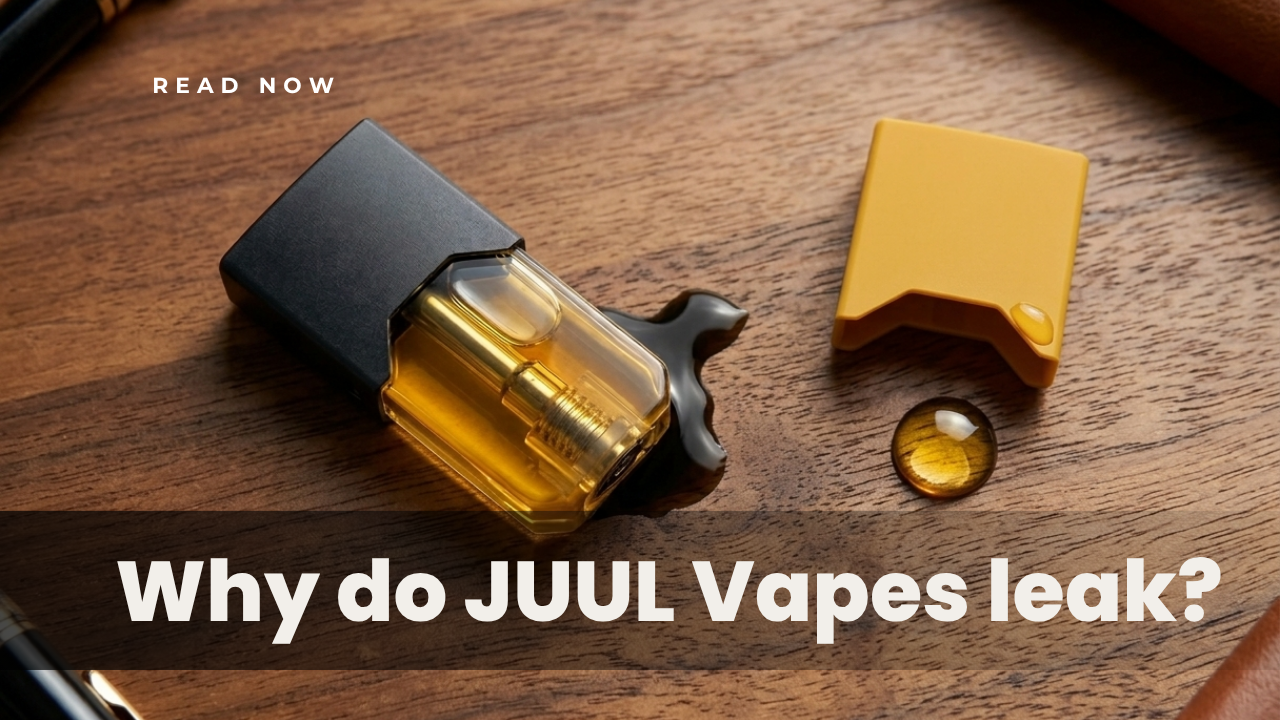
If you have ever pulled your device out of your pocket only to find a sticky mess, you probably blamed a “bad batch” of pods. While manufacturing defects happen, they are actually quite rare. Most JUUL leaks are not random accidents; they are the result of basic physics involving temperature, atmospheric pressure, and airflow.
In the high-heat environment of the UAE, your device is constantly battling external forces. Whether you are using the classic JUUL or the upgraded JUUL 2, understanding why liquid escapes the pod is the first step to preventing it. By mastering a few simple habits, you can protect your flavor, ensure consistent nicotine delivery, and extend the life of your device.
Why is My JUUL Leaking?
JUUL pods leak when the e-liquid thins out due to heat or when air pressure changes force the liquid through the internal airflow channels.
Does this mean the pod is broken? No. In most cases, the seal is intact, but the environment (like a hot car in Dubai or a flight at 30,000 feet) has overwhelmed the pod’s vacuum system. If you see liquid, it is likely because the juice has become too runny to stay behind the wick or was pushed out by expanding air.
How JUUL Pods Are Designed: Expertise & Transparency
JUUL Labs engineered its pods as a “closed system.” Unlike refillable vapes, where you manually fill a tank, JUUL 2 pods and original pods come pre-filled and sealed. This design uses a precise balance of internal vacuum pressure to keep the nicotine salt e-liquid saturated in the cotton wick without flooding it.
While this system is significantly more leak-resistant than older open-tank systems, no vape pod is 100% “leak-proof.” The JUUL 2 features improved structural integrity and a specialized “Pod ID” chip, but it still relies on physical seals that can be affected by the extreme conditions we experience daily in the Middle East.
The Science Behind Leaks: Heat + Pressure Explained Simply
Heat Physics: The Thinning Effect
E-liquid contains Vegetable Glycerin (VG) and Propylene Glycol (PG). When these liquids get warm, their viscosity (thickness) drops. Think of it like honey: it is thick at room temperature but runs like water when heated.
- The Result: In the UAE heat, the liquid becomes so thin that it seeps past the cotton wick and into the airflow tube.
- Common Trigger: Leaving your JUUL on a dashboard or in a sunny window.
Pressure Physics: The Expansion Effect
Air expands when pressure drops (like during takeoff in a plane) or when it is squeezed (like in a tight pocket).
- The Result: That small bubble of air inside your pod acts like a piston. When it expands, it has to go somewhere, and it often pushes the e-liquid out through the chimney or the bottom seals.
- Common Trigger: Flying, driving up to Jebel Jais, or wearing tight-fitting trousers.
Why JUUL Pods Leak More in Hot Climates
Living in the UAE presents a unique challenge for vapers. The transition from a 20°C air-conditioned office to 45°C outdoor heat causes rapid expansion and contraction within the pod.
Because JUUL devices are compact, they have less thermal mass to absorb heat. This means they warm up almost instantly. Furthermore, charging your device generates internal heat. If you charge your JUUL 2 with the pod still attached in a warm room, you are essentially “cooking” the liquid, making a leak almost inevitable.
Flavor & Color Matters: What Leaks More?
Not all e-liquids behave the same way. The chemical composition of certain flavorings can affect how they react to temperature.
- JUUL 2 Crisp Menthol & Polar Menthol: Mentholated flavors often feel “wetter.” Because menthol provides a cooling sensation, users sometimes mistake natural condensation for a leak.
- JUUL 2 Ruby Menthol: Sweet, fruity profiles like berry or mango blends can sometimes accumulate more residue around the mouthpiece due to the sweeteners caramelizing slightly on the coil.
- JUUL 2 Virginia Tobacco & Autumn Tobacco: Tobacco flavors generally use more stable base profiles. Many users find that these pods stay “drier” for longer because they lack the high-volatility aromatic compounds found in mint or fruit.
Condensation vs. Real Leaks: Know the Difference
Most users see a tiny drop of liquid and panic. However, there is a big difference between a leak and condensation.
- Condensation: This is vapor that didn’t make it out of the mouthpiece and turned back into liquid. It usually looks like a thin film of moisture. You can “fix” this simply by wiping the bottom of the pod with a tissue.
- Real Leak: This is a pool of liquid that has flooded the gold contact points inside the device. It usually happens if the internal vacuum is broken.
The Pro Tip: If you wipe your pod and it stays clean for a few hours, it was just condensation. If it’s wet again in five minutes without use, you have a pressure-driven leak.
Usage Habits That Increase Leaks
How you vape matters just as much as where you are.
- Chain Vaping: Taking hit after hit without a break overheats the coil and the surrounding liquid.
- Hard Pulls: Inhaling too aggressively acts like a vacuum, sucking more liquid into the coil than it can vaporize. Use a gentle, steady draw instead.
- Biting the Pod: Many people have a habit of clenching the mouthpiece with their teeth. This can slightly deform the plastic, breaking the airtight seal.
Travel & Storage Scenarios to Avoid
- The “Pocket Press”: Storing your JUUL in tight jeans creates “mechanical pressure” that can squeeze the pod.
- Upside Down Storage: Storing pods mouthpiece-down allows gravity to help the liquid find its way into the airflow channel.
- Flight Mode: Always remove your pod from the device before a flight. The change in cabin pressure is the #1 cause of “pod-quakes.”
How to Prevent JUUL Pod Leaks: Actionable Tips
If you want a mess-free experience at JUUL Dubai, follow these golden rules:
- Store Upright: Always keep your device standing up when not in use.
- Detach While Charging: Heat from the battery can thin the juice in the pod. Unplug it before you plug it in.
- The “Paper Towel” Trick: If you suspect a leak, remove the pod, wrap the bottom in a tissue, and blow gently through the mouthpiece. This clears the central tube.
- Clean the Contacts: Use a Q-tip with a tiny drop of rubbing alcohol to clean the inside of your device weekly.
FAQs: Expert Advice for UAE Vapers
Does a leaking JUUL pod mean it’s defective?
No. Most leaks are caused by heat, air pressure changes, or storage position. Only a small number are true manufacturing defects.
Is it safe to vape from a leaking pod?
Yes, but it’s unpleasant. You may experience liquid spit-back and weaker flavor due to disrupted airflow.
Why does my JUUL taste burnt after leaking?
When e-liquid leaks out, the wick dries. Heating a dry wick burns the cotton, causing a harsh, burnt taste.
Final Takeaway: Physics, Not Failure
JUUL pods are highly engineered pieces of technology, but they are still subject to the laws of physics. Heat thins the liquid, and pressure pushes it out. By understanding these triggers, you can enjoy a consistent, high-quality experience every time.
Smarter storage and gentle usage lead to better flavor and a longer-lasting device. If you are looking for the latest in leak-resistant technology, consider upgrading to the JUUL 2 system, which offers better seals and a more robust design for the modern vaper.
Ready to upgrade your experience? Explore our full range of JUUL 2 pods—including the refreshing Summer Menthol or the rich Blackcurrant Tobacco—and find your next favorite flavor at JUUL Dubai today.